
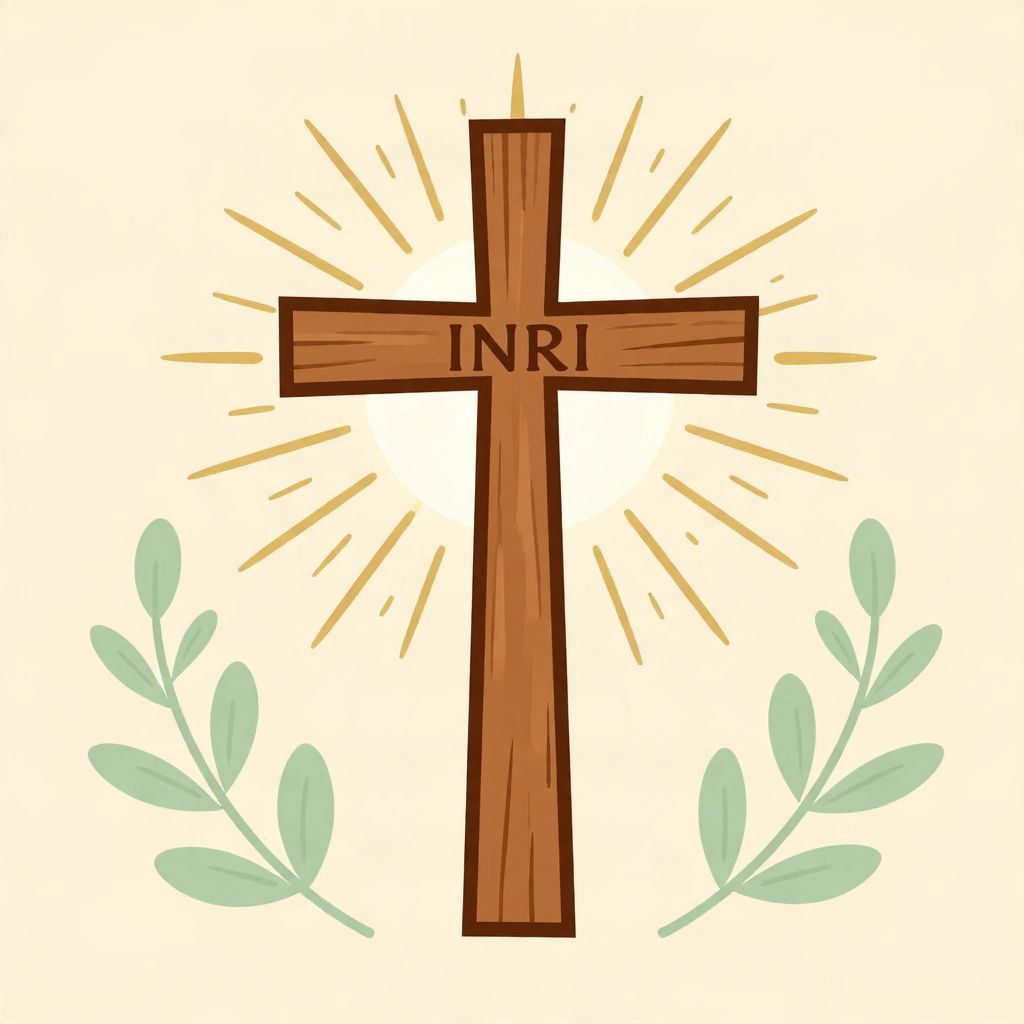
Have you ever gazed upon a crucifix and noticed the letters “INRI” inscribed above Jesus? This abbreviation carries deep significance, yet many overlook its profound meaning. Understanding INRI not only clarifies the events of the crucifixion but also deepens one’s faith and appreciation for Christ’s sacrifice.
This article explores the meaning of INRI, its biblical roots, and its relevance today. By delving into Scripture, one can discern the weighty truths this abbreviation embodies.
What Does Inri Mean?
INRI stands for “Iesus Nazarenus, Rex Iudaeorum,” which translates to “Jesus of Nazareth, King of the Jews.” This title was inscribed on the sign that Pontius Pilate ordered to be placed above Jesus’ head during the crucifixion as recorded in John 19:19-20.
The Biblical Context
The Gospel of John provides crucial insight into the inscription. Pilate, after condemning Jesus, sought to mock the Jewish leaders who demanded His crucifixion. By labeling Jesus as the King of the Jews, Pilate aimed to emphasize the absurdity of their accusation against an innocent man (John 19:21-22).
The title carries a dual meaning. It signifies both Jesus’ earthly identity and His divine authority. Mark 15:26 also refers to Jesus as the King of the Jews, echoing the sentiment present in other Gospel accounts.
The Significance of the Title
Jesus being called the King of the Jews directly confronts the political and spiritual expectations of the Jewish people. They anticipated a political leader to liberate them from Roman occupation. However, Jesus’ kingship transcended earthly politics, focusing on a spiritual kingdom (John 18:36).
This declaration invites reflection: What does Jesus’ kingship mean for our lives today? Are you seeking worldly solutions when He offers a deeper, spiritual redemption?
Understanding INRI in Historical Context
To comprehend the depth of INRI, one should consider the historical and cultural context surrounding Jesus’ crucifixion. The Jews lived under Roman rule, and their understanding of a king was rooted in earthly power. Romans used titles like King to exercise authority and control.
The inscription served as a stark reminder that Jesus’ mission was not about wielding earthly power but establishing a heavenly kingdom. His true kingship would lead to salvation and eternal life, paving the way for all to enter into relationship with God.
The Charge Against Jesus
In ancient Roman law, a sign above the criminal’s cross indicated the reason for their execution. The charge against Jesus was blasphemy, but His claim to be the King transformed the accusation into a powerful statement about His identity. His death was not just a consequence of His actions but a pivotal moment in God’s redemptive plan (Isaiah 53:5).
Have you fully embraced the implications of Jesus’ identity in your life? Recognizing Him as King profoundly shifts perspectives and responses to life’s challenges.
Jesus, the Fulfillment of Prophecy
Jesus’ crucifixion fulfills numerous Old Testament prophecies. Micah 5:2 foretold His birthplace in Bethlehem, while Isaiah 53 revealed the suffering servant who would bear the sins of many. The title “King” reinforces Jesus’ messianic identity as prophesied.
His acceptance of the title “King of the Jews” also challenges preconceived notions about power and authority. Instead of a ruler in opulent robes, Jesus wore the crown of thorns, signifying His willingness to endure suffering for the sake of humanity (Matthew 27:29).
Symbolism of Jesus’ Kingship
Jesus’ kingship embodies humility and servanthood. Philippians 2:6-8 describes how He, though divine, took on human form and became obedient to death. This paradox of Jesus as King, yet suffering servant, invites believers into a deeper understanding of true leadership.
What type of king do you expect in your life? Are you looking for a ruler who meets worldly desires, or are you recognizing the king who serves and loves beyond measure?
Modern Application of INRI
Understanding “INRI” in contemporary terms can reshape how believers engage with their faith. When we acknowledge Jesus as the King of our lives, we submit to His authority and guidance over all aspects of our daily existence.
To live under His reign involves recognizing our need for His grace. We find freedom in submitting to the will of the King, who knows what it means to struggle and who walks alongside us in our darkest moments (1 Peter 5:7).
Steps to Embrace His Lordship
Consider these practical steps to live out the significance of INRI in your life:
- Surrender your personal desires, acknowledging His will above your own. Reflect on Matthew 6:33, which encourages seekers to prioritize God’s kingdom.
- Engage actively in prayer, inviting Him into life’s decisions. Honest communication with God fosters a deeper relationship.
- Study Scripture diligently. Immerse yourself in God’s Word to understand His character and His purpose for your life.
- Serve others in love, modeling the humility of Christ. Let your actions reflect His servanthood in everyday interactions.
- Reflect frequently on His sacrifice. Contemplate how the cross defines your relationship with God and your identity in Christ.
Theological Implications of INRI
The inscription “INRI” raises profound theological questions about identity, sacrifice, and salvation. It compels believers to examine how they view Jesus and the implications of His role in their lives.
This title emphasizes that Jesus is both fully divine and fully human, an important doctrine in Christian faith. The Council of Chalcedon affirms that Christ is “acknowledged in two natures.” His identity as God and man brings hope to humanity, as it means He perfectly understands human struggle.
Reflections on Identity and Geography
Jesus of Nazareth, the King of the Jews, illustrates that God can work through humble beginnings and places. Nazareth was an insignificant town, yet God’s plan unfolded through an ordinary setting. This reveals His ability to use anyone and anything for His glory.
Aren’t there areas in your life that feel insignificant? Remember that God values what the world overlooks and is capable of bringing forth purpose from those places.
Living as Citizens of His Kingdom
The proclamation of Jesus as King carries a calling for believers to live as citizens of His kingdom. This kingdom is marked by love, mercy, humility, and servanthood. In Matthew 5:14-16, believers are called to be the light of the world, reflecting His character in all they do.
As representatives of Christ, what does it mean to live in a manner that honors Him? Each interaction becomes an opportunity to showcase the light of the King through actions, words, and attitudes.
Practical Steps to Reflect His Kingdom
Consider these practical applications to reflect the Kingdom of God in your daily life:
- Practice forgiveness intentionally. Reflect on how forgiveness extends first from God’s grace toward you.
- Engage in acts of kindness regularly. Small gestures can reflect His love profoundly.
- Commit to community service. Get involved with local programs that address need and demonstrate Jesus’ heart for the marginalized.
- Share your faith boldly. Speak about what Jesus means to you and how His kingship has transformed your life.
- Pray for your community and leaders. Acknowledge Jesus as King over every circumstance.
Conclusion
The letters “INRI” serve as a powerful reminder of who Jesus is and what He accomplished on the cross. While Pilate inscribed the title to mock Jesus, God infused it with profound truth. Jesus is indeed the King of the Jews and the King of all who accept Him into their hearts.
By recognizing the significance of INRI, believers can draw closer to Christ and live lives that proclaim His sovereignty. Reflect on His kingship today. How can you live differently as a result of your understanding of INRI?
As you journey in faith, consider exploring more articles that deepen your understanding of God’s Word. For those interested in prayer, you might find insights in prayer for Israel or prayer for the souls in purgatory. Dive deeper into the truths of Christianity and how they apply to your daily life.