
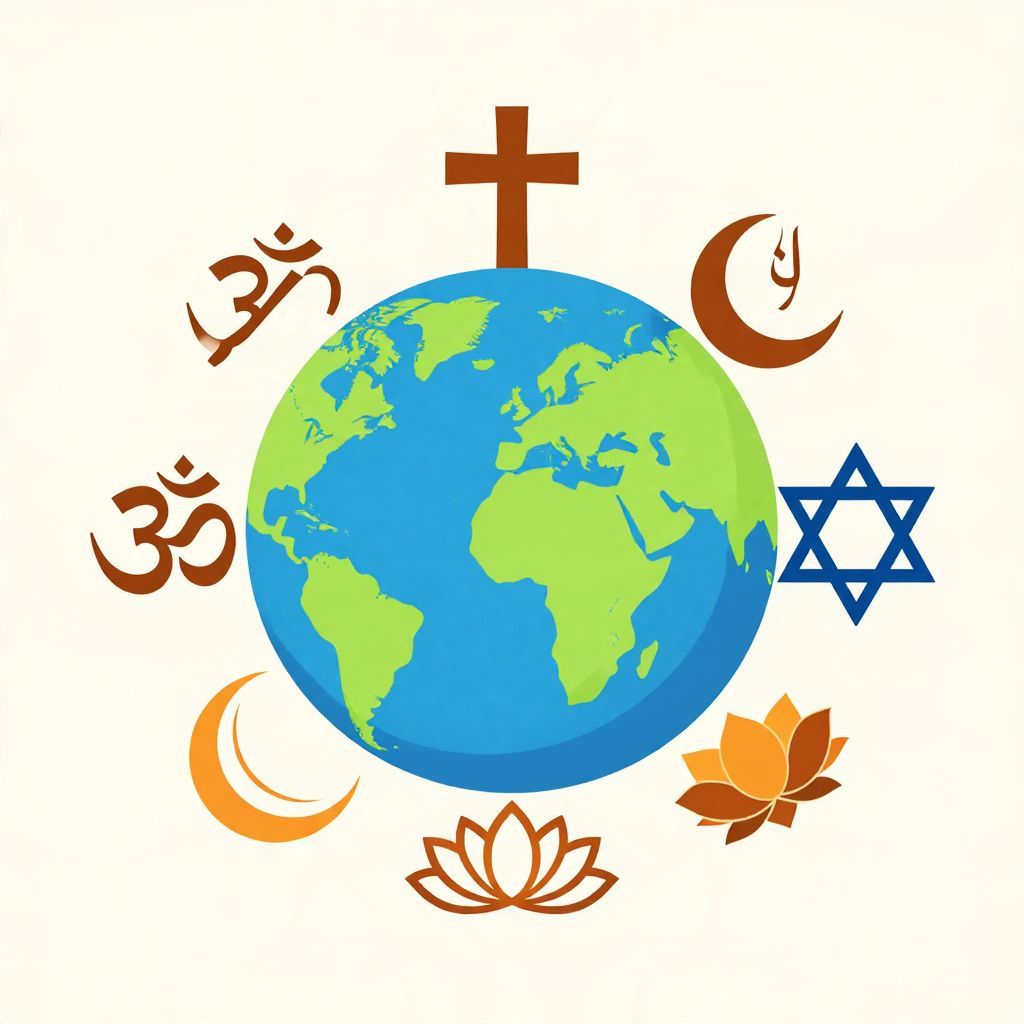
Have you ever considered the diversity of faiths around the globe? With so many beliefs shaping human experiences, it might seem overwhelming. Understanding which religion holds the most followers can illuminate how different cultures approach spirituality and ethics.
This article will explore what the most popular religion in the world is, why it matters, and how our understanding of faith impacts our lives. Rooted in Scripture, we will examine the heart of Christianity and how it compares to other major religions.
What Is The Most Popular Religion In The World?
The most popular religion in the world is Christianity, with over 2.3 billion adherents globally. This accounts for nearly one-third of the world’s population and includes various denominations, each contributing to the richness of Christian belief and practice.
The Essence of Christianity
Christianity centers on the life and teachings of Jesus Christ. In John 14:6, Jesus states, “I am the way and the truth and the life. No one comes to the Father except through me.” This verse encapsulates the heart of the faith: the belief in Jesus as the exclusive path to salvation.
Christianity emphasizes love, grace, and redemption. Romans 5:8 reminds us, “But God demonstrates his own love for us in this: While we were still sinners, Christ died for us.” This foundational truth offers hope and sets Christianity apart from other systems of belief.
Other Major Religions
Islam: A Close Second
Following Christianity is Islam, with around 1.9 billion followers. Islam teaches monotheism, believing in one God (Allah). The Quran serves as the holy book, revealing God’s will through the prophet Muhammad.
Muslims practice the Five Pillars of Islam, which guide faith and actions. These pillars encourage prayer, fasting, charity, and pilgrimage, reflecting a deep commitment to their beliefs.
Hinduism: A Different Perspective
Hinduism, with approximately 1.2 billion practitioners, presents a unique perspective on spirituality. Followers engage with a multitude of deities, rituals, and philosophies, leading to a rich tapestry of beliefs.
Key concepts like karma and reincarnation influence daily life and ethical choices. While it lacks a unifying central figure like Jesus or Muhammad, it remains profound in depth and diversity.
Buddhism: The Path of Enlightenment
Buddhism, with around 520 million followers, shares philosophical principles rather than strict dogmas. Founded by Siddhartha Gautama (the Buddha), it explores suffering and the path to enlightenment through practices like meditation.
Central teachings focus on the Four Noble Truths and the Eightfold Path, guiding adherents toward ethical living and spiritual awakening.
The Impact of Religion on Society
Values and Morality
Religion shapes the values and morals of societies. Christianity, for example, emphasizes the importance of love, as seen in Matthew 22:39: “Love your neighbor as yourself.” This call to love encourages compassion and kindness, forming the ethical backbone of many Christian communities.
Other faiths promote similar values. In Islam, the Quran urges followers to practice justice and charity, which fosters a sense of community and responsibility.
Cultural Influence
Religions also influence culture, from art and music to holidays and traditions. Christianity has inspired countless works of art, such as Michelangelo’s Sistine Chapel and Handel’s “Messiah.” These contributions enrich humanity’s cultural heritage.
Community and Belonging
Being part of a faith community fosters belonging and support. Christians gather in churches, sharing worship, fellowship, and mutual encouragement. Hebrews 10:25 encourages believers not to give up meeting together, highlighting the importance of community in spiritual growth.
Other religions also emphasize community. In Islam, congregational prayers strengthen bonds among followers. Such relationships help individuals navigate life’s challenges and stay rooted in their faith.
Understanding Religious Differences
Are All Religions the Same?
While many religions share common themes, they differ significantly in beliefs about God, salvation, and the afterlife. Christianity’s exclusive claim, centered on Christ’s redemptive work, sets it apart from others.
Reflect on the essence of your own beliefs. What do they say about life, purpose, and your understanding of God?
How Do Different Religions Address Suffering?
Suffering is a universal experience, yet different faiths offer distinct perspectives on it. Christianity sees suffering as a part of the fallen world but assures believers that God is present in their pain (Psalm 34:18).
Buddhism teaches that suffering originates from desire and provides a path to liberation through self-awareness. Engaging with these teachings can deepen one’s understanding of life’s challenges.
Finding Common Ground
Respecting Every Faith
To foster harmony, it is essential to respect people of all faiths. Philippians 2:3 urges believers to value others above themselves, promoting dialogue and understanding. Have you taken time to learn about other religions?
Listening to others’ beliefs enriches our understanding and fosters compassion. Recognizing that each tradition seeks truth is a step toward unity.
Sharing the Good News
Christianity, while recognizing the existence of other religions, invites all to experience the love of Christ. Mark 16:15 commands us to go into all the world and preach the gospel. How can you share this message of hope in your community?
Engage in conversations and actions that reflect Christ’s love. Each interaction can serve as an opportunity to demonstrate the transforming power of faith.
Conclusion
Christianity stands as the most popular religion in the world, inviting individuals to embrace love, grace, and a relationship with God through Jesus Christ. Its influence weaves through history, culture, and moral values, enriching lives across the globe.
As you navigate your own faith journey, consider the teachings of Scripture and how they inform your interactions with others. Explore deeper connections with those around you, seeking to share Christ’s love and truth.
If you want to dive deeper into faith-based topics, consider exploring prayer for the church or engaging in a prayer for Israel today. Such practices can reinforce community and encourage spiritual growth in your walk with God.
Embrace the rich diversity of beliefs, valuing each person’s journey while holding fast to the truth of the gospel. How will your faith influence your actions today?